They Sent a Defender to a Knife Fight, and It Came Home Walking
Three luxury off-roaders went to a real rally raid and finished. That is the whole verdict, and it is enough.

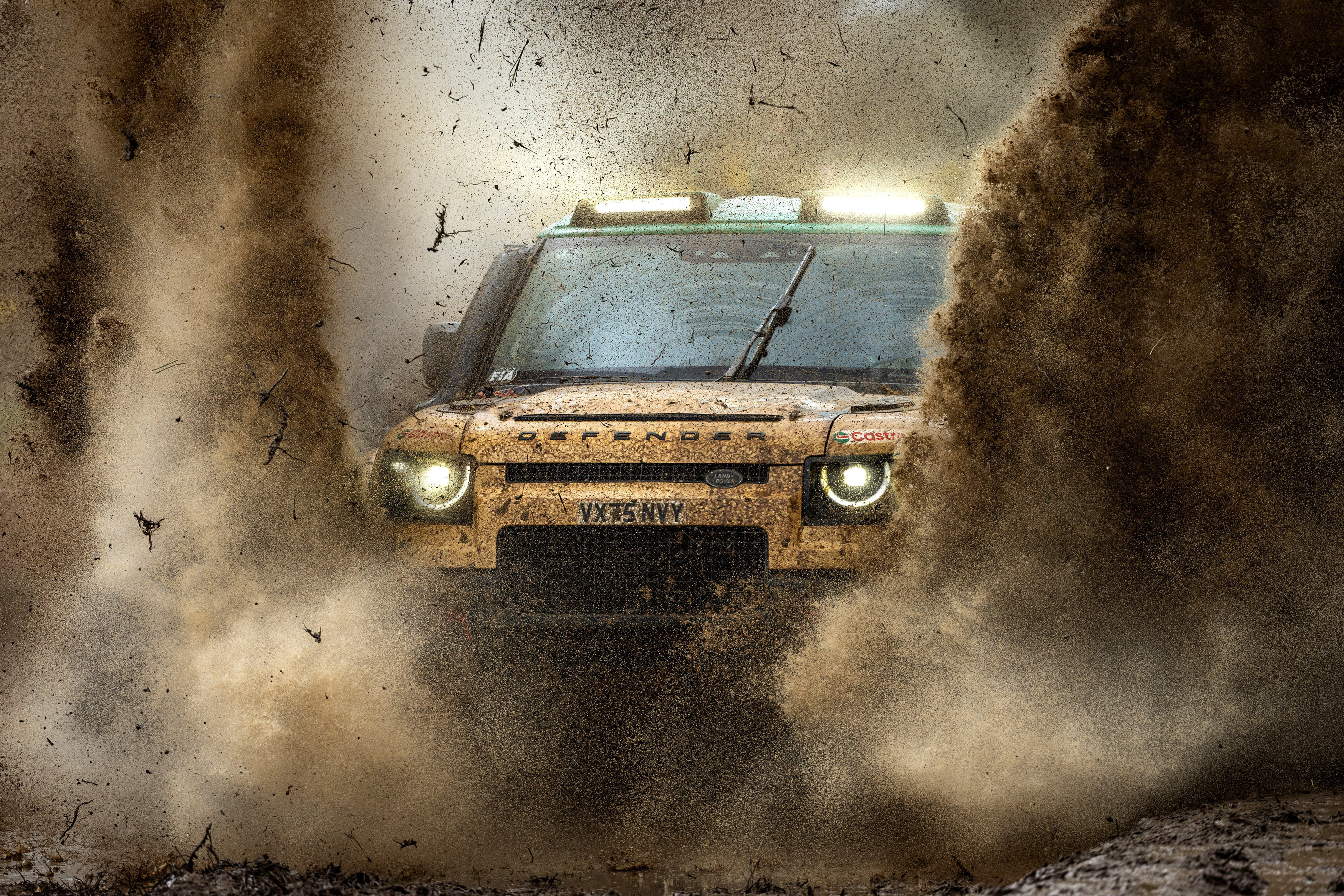
A rally raid does not care how nice your truck is. It will drown it, beach it, snap it on a tree, and leave the bodyshell in a Portuguese ravine for the goats to wonder at. So when I tell you that Land Rover sent three luxury off-roaders to the 2026 bp Ultimate Rally-Raid Portugal and brought all three home, I am not telling you about a press release. I am telling you about a thing that survived.
Five days. Mud, water, trees, tight tracks, and what the people who write these things politely call highly-variable conditions, which is the language of a man who watched a riverbed try to eat his livelihood. The three Defender Dakar D7X-R cars covered a combined 6,600 kilometers, which is 4,101 miles, across Portugal and Spain. None of them quit. Read that again. None of them quit.
Now, I am a suspicious man by trade. When a manufacturer tells me a luxury truck is also a race car, I check my wallet and count the screens. I have heard "the most capable" so many times it has stopped meaning anything, the way "artisanal" stopped meaning anything the day they put it on a gas station sandwich. And the marketing prose on this one is thick. A beacon of liberty, they call it. Embraces the impossible, they call it. I have read drier poetry on a tombstone.
But here is the part that shut me up.
This is not a tube-frame fantasy wearing a Defender costume. The D7X-R is built off the production Defender OCTA. Same bodyshells, off the same production line. Same transmission. Same driveline layout. Same D7x body architecture, a lightweight aluminum monocoque, the actual bones of the truck a man can buy. They modified it for the FIA rulebook and for getting punched in the mouth by a continent, enhanced cooling, new suspension, wider track, fine. But under the hood sits the same 4.4-liter twin-turbo V8 that lives in the OCTA. A V8. An honest-to-God eight-cylinder engine, breathing and pulling, in the year of our Lord 2026, while half the industry is busy explaining to me why my fun is a public-health hazard.
I could kiss the engineers. I won't, but I could.
Let me be careful here, because careful is the whole point of this column. The Defenders ran in the Stock class, for production-based cars, and Stéphane Peterhansel and Mika Metge won it outright with a time of 11:57:33. Rokas Baciuška and Oriol Vidal came second at 12:00:02. Sara Price and Sean Berriman, third, at 13:09:58. Two and a half minutes covered first and second over five days and four thousand miles, which tells you these cars were not nursing each other to the line. They were racing each other to it.
And I will not pretend the Stock-class trophy is the trophy. In the overall Car category, against the purpose-built Ultimates, the Defenders ranked 16th, 17th and 30th. That is the honest number, and Land Rover printed it themselves, which I respect more than the poetry. The Ultimates are spaceships. The Defenders are trucks with a racing license. The release crows that the Defenders "lined up with comparable timings to the Ultimates," and I will allow them exactly that much: comparable, in the same time zone, close enough that the purpose-built crowd had to mean it. Not faster. Close. There is a difference, and a serious paper keeps it.
Here is what I will not do. I will not hand you a grade on whether this thing is worth your money, because nobody told me what it costs and I am not in the habit of inventing prices to fill a sentence. The competition car is not for sale anyway. The OCTA it is built from has a number on it somewhere, but it is not in front of me, and a verdict on value without a price is a man shouting opinions into a vending machine. I have read columns like that. I have probably written one. I am trying to do better.
What I will do is point at the thing that actually matters, the thing no spec sheet can fake and no algorithm can drive for you.
Listen to Sara Price. Two corners she didn't quite make. Then the car wouldn't go into reverse, and she lost about 30 seconds wrestling it back, and she says so, out loud, with her name attached. Listen to Baciuška, who won the final stage and clawed back 1:25 over the last 100 kilometers and still came up a few minutes short for the overall, and shrugged that this is how short rallies go, one mistake costs a lot. That is the sound of human beings doing a hard thing with their hands and their nerve and their judgment, and getting it slightly wrong, and owning it. Thirty seconds. Two corners. A few minutes. That is a rally. That is a person.
Try to get a machine that drives itself to lose 30 seconds finding reverse and then tell a reporter about it with a grin. It cannot. It does not have a grin. It does not have a co-driver it apologizes to. There is a whole industry now promising to take the wheel out of your hands and the consequence out of your life, and they sell it as safety, as progress, as the common good, the way a hall monitor sells you a hall pass. And here are three trucks built on a production line, run by people who can be beaten and know it, fighting over two and a half minutes in the Portuguese mud. One of those things is the future they keep promising me. The other one is the reason I still get out of bed.
This is the first year of a three-year program. Defender competed at Dakar for the first time this season after a year of carrying officials around as the support fleet, and now it is in the World Rally-Raid Championship for real. Next stop is the Desafio Ruta 40 in Argentina, the 24th to the 29th of May. New project, new mistakes, new mud. Good. Let it earn the poetry.
A man can argue all day about whether a luxury truck has any business calling itself hardcore. Most of them don't. Most of them are a heated armrest with delusions. But you do not get to argue with a finish line. The engineers built a thing on the same bones they sell to the public, dropped a V8 in it, handed it to people who can fail, and pointed it at five days of mud. Three went out. Three came back.
The trophy is nice. The finish is the point.