Lincoln Built a Room You Cannot Drive, and It May Be the Most Honest Thing It Has Made
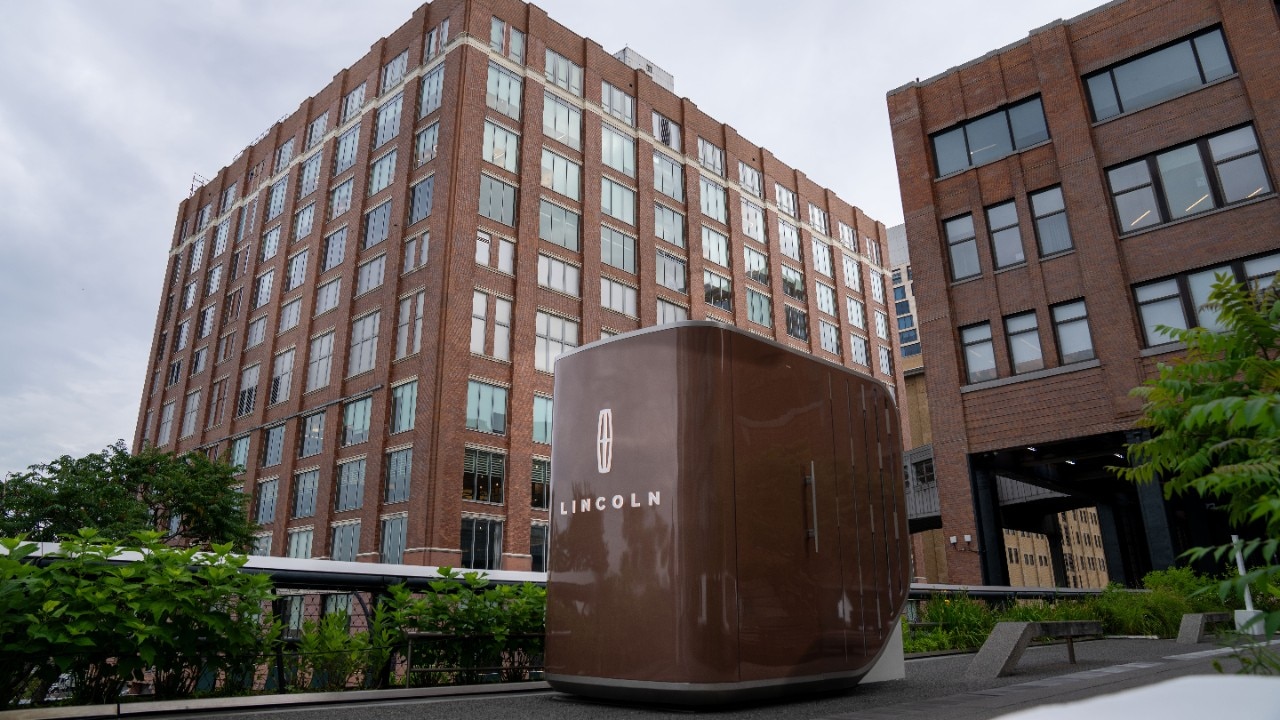
On the High Line, Lincoln lifted the sanctuary out of the Navigator and stood it up in the open air. The question is whether a sanctuary survives without the car around it.

Begin with the seat, because the seat is the confession.
Lincoln pried the 30-Way Perfect Position driver's seat out of the Navigator, the genuine article, thirty axes of articulation and an active motion massage that kneads the lumbar like a discreet conscience, and stood it on the High Line at 14th Street with no wheel before it and no road beneath it, upholstered in Warm Horizon leather from the Black Label Enlighten theme, a hide so deliberately, expensively serene it reads less like a color than a sedative. A company removed the car and kept the chair, gambling that the single most considered object in its most expensive vehicle could stand alone, outdoors, on a public boardwalk above the Hudson, and still mean something. That is faith or madness, and after three decades I cannot tell them apart, which is why they keep me on.
What Lincoln has done, stripped of brochure, is lift Rejuvenate, the cabin ritual that reclines, warms, dims, diffuses a digital scent, and pipes ten curated minutes of Aurora Borealis through the Revel system, out of the Navigator entirely, and ask the question carmakers are too literal to ask: can the calm survive without the vehicle around it.
The materials answer, because Lincoln chose them rather than gathered them. Sunrise Copper and White Platinum, exterior paints dragged indoors and asked to behave as atmosphere. Satin Elysian trim, the Black Label note, the brand's own self-declared ultimate expression of luxury, deployed as the grammar of a room rather than the skin of a truck. Ambient light quoted from the 48-inch Panoramic Display. A touch-free interface, so nothing as crude as a fingerprint smudges the serenity. Every one a quotation carried across a threshold it was never engineered to cross, and that is the peril. A material that works only because it is bolted to a costly SUV is a costume. A copper that still reads as sanctuary on a weathered plank above the river has earned the word.
This is what turns the thing serious instead of cynical. Most activations photograph like jewelry and feel like nothing. Lincoln built the inverse, a thing whose whole purpose is the part no camera survives: the massage, the warmth, the scent, the moment your shoulders descend from around your ears. You cannot photograph a nervous system standing down. You can only feel it, eyes closed, while New York stays loudly itself twenty feet away.
Hank would hand me the objection with a sneer. A sanctuary open only June 12 through June 14, on a borrowed stretch of park, is a press event with superb upholstery, and I will not tell you it is worth its price, because Lincoln has not named the price. But Lincoln has tried this before and lost, selling sanctuary as a chrome word for quiet you were meant to take on faith because the dashboard said so. Ambient light is a confession, and for years Lincoln's lied. The room on the High Line is the brand setting it in the open, no car to hide behind, saying: sit, close your eyes, tell me if this is real. You do not do that if you are bluffing.
Lincoln built a room you cannot drive. For the first time in a long time, I believe it knows why.
Editorial disclosure: Lincoln chauffeured Drive Observer to the High Line in a Black Label Navigator, reclined our 30-Way Perfect Position seat to the exact degree the brand has clinically determined unknots a columnist, and sent us off with a hand-poured Sunrise Copper candle and a chilled flute of something the publicist called 'the scent of Aurora Borealis, but drinkable.' Per our strict ethical policy, we do not let this influence our coverage.