The Mercedes VLE Is the Future Nobody Asked For, and Everybody Will Ride In
Mercedes built an eight-seat electric limousine that handles like a CLA and rolls its own seats into the garage. Granted the comfort. Now let me measure it.

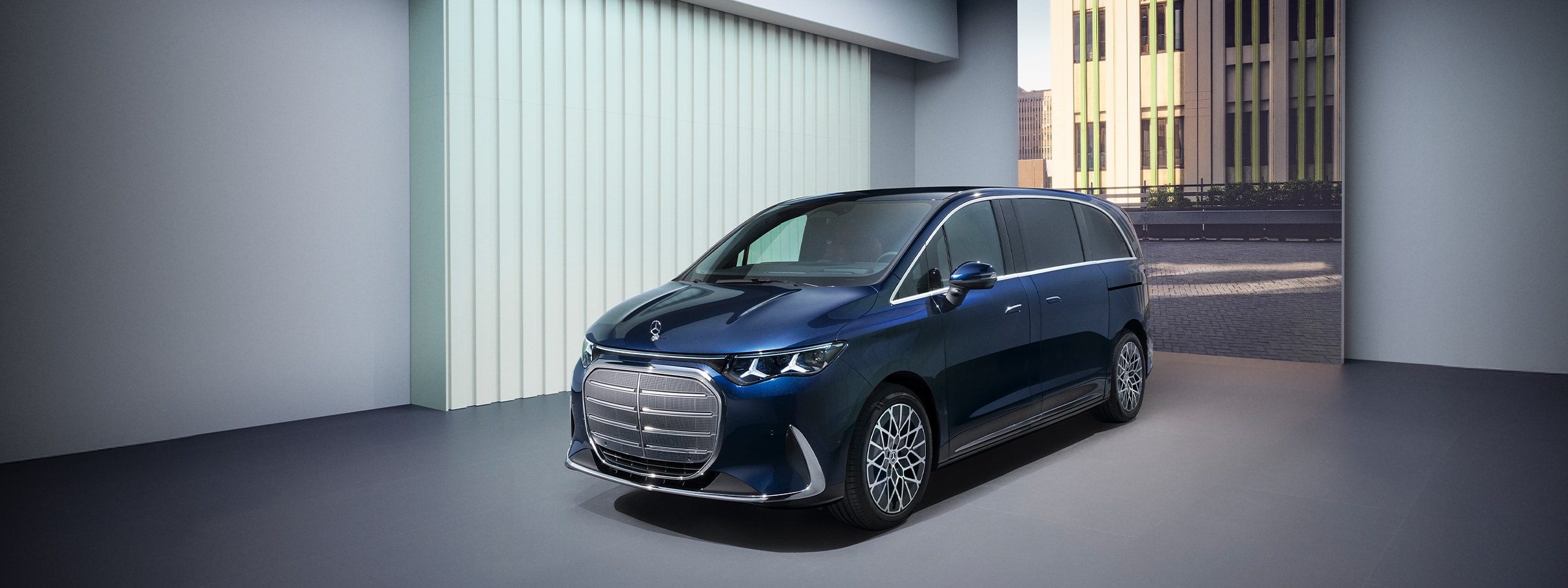
Nobody dreams of a van. Children draw sports cars. Men in midlife buy them. The van is what arrives when the dreaming is over and there are eight people who need to be somewhere, and it is, by a wide and unsentimental margin, the most honest shape in the automobile. Mercedes has now built the electric version, called it the VLE, and dressed it in enough glass and silicon to make you forget what it is. It is a van. A magnificent one. Let me show you.
Start with the number that ends the argument before it begins. The VLE 300 carries a 115-kWh battery and a preliminary WLTP range of more than 700 kilometers, which is to say roughly 435 miles, on 800-volt architecture that takes 355 kilometers of range in 15 minutes. Mercedes drove one from Stuttgart to Rome, almost 680 miles, and stopped twice. Two stops. For coffee. The thing that was supposed to make a vehicle this size impossible, the battery, is the thing that just made it serene.
This is the move I have been promising you for years, and here it is wearing a suit. The eight-seat people-mover was the body style electrification was supposed to struggle with most: heavy, boxy, dragging a tennis court of frontal area through the air. Instead the VLE posts a drag coefficient of 0.25, lower than most sedans, and sips less than 20 kWh per 100 kilometers. Aerodynamics is not a styling choice on this car. It is the whole argument, and the argument is won.
Now grant Mercedes its favorite word, because it has earned it. Comfort. The VLE rides on AIRMATIC air suspension with 1.5 inches of level adjustment, lowers itself half an inch above 68 mph, and squats 1.5 inches at a standstill so the people you are chauffeuring do not have to lift a knee. Seven degrees of rear-axle steering pull the turning circle to 37.5 feet, which Mercedes notes is about that of a CLA, a small sedan, in a vehicle 215 inches long. A limousine that parks like a hatchback is not a contradiction the old industry could resolve. This one resolved it with software and a steered rear axle, and it did it quietly.
Here is where I am supposed to swoon, and I nearly do. The seats roll. Each manual seat wears four integrated wheels and a system called Roll & Go, so you unlock it, slide it out, and roll it into the garage like a drinks trolley. The electric seats rearrange themselves by app, a feature Mercedes calls, with a straight face, "seat ballet." Overhead there is a 31.3-inch panoramic display in 8K that retracts into the headliner, a Burmester system with 22 speakers and Dolby Atmos, and a sheet of fixed glass running from the B-pillar to the rear. Comfort is not softness. Comfort is the absence of anyone asking you to compromise, and the VLE has removed the compromises one by one until what remains is a lounge that happens to do 111 mph.
So I grant it. All of it. And now I measure it, because granting is not the same as kneeling.
What the VLE is, stripped of the glass, is a confession. The industry has spent a century selling the automobile as self-expression, the open road, the driver and the machine, and the VLE answers that the future of moving human beings is a quiet, efficient box in which the human beings are passengers and the car is doing the driving. The supercomputer behind MB.DRIVE runs at up to 254 trillion operations per second across 10 cameras, five radars, and 12 ultrasonic sensors, and it is, in Mercedes's own words, "technically prepared for advanced SAE-Level 2 driving assistance," with a point-to-point CITY PRO feature promised later, over the air. The VLE is not built around the person at the wheel. It is built around the day the wheel stops mattering. That is the right direction, and it is also the end of a certain kind of romance, and the people who loved that romance are going to hate this car for reasons they will struggle to name.
I will name it for them. They will call it soulless, and what they mean is that it does not need them.
But I promised you the measure, and here it falls. There is a serpent in this lounge, and Mercedes installed it on purpose. The MBUX Virtual Assistant, the press release boasts, "uses multi-agent generative AI" and responds "like an informed friend." Read that again. They have put a generative-AI chatbot in the cabin, given it memory, and told it to imitate friendship, in a vehicle whose entire pitch is human comfort. This is the rot, and it is the one place the future is going wrong. I will take the 0.25 drag coefficient, the 435 miles, the rolling seats, and the steered rear axle, all of it, the genuine engineering that moves us forward. I will not take a machine that fakes a personality and calls it a friend, because that is not progress, that is the thing coming for every cabin and every craft, dressed up as convenience. A car can be the future. It should not pretend to be a person. There is a difference, and the people who built the rest of this car well enough to earn my admiration ought to be the first to see it.
Hold the rest, though, against the one number nobody will print. Mercedes has not given a price. The figures are provisional, the range is internal and uncertified, the CITY PRO feature is a promise on a future update. So I will not tell you whether the VLE is worth the money, because Mercedes has not yet told me what the money is, and a columnist who reviews a number she has not seen is no better than the chatbot. What I will tell you is what it means.
It means the argument is over. Not whether the box can be electric. Whether the box is the future. It is. The VLE is the shape that wins when the dreaming is done: 435 miles, two coffees, eight seats that roll into the garage, and a car that asks nothing of you but the destination. Nobody asked for it. Everybody will ride in it.
Welcome home.