The Sea Freight Is the Story
Cadillac just won a sustainability prize at Le Mans, and the most interesting thing about it has nothing to do with the trophy.

The instinct, when a racing team wins a sustainability award, is to roll your eyes until they ache. I understand the instinct. A sustainability prize handed out at the 24 Hours of Le Mans, the most gloriously wasteful party motorsport throws all year, sounds like a vegan menu printed on the side of a private jet. So let me grant the cynics their strongest point and then take it away from them, because I have read the dossier, and the dossier is not what they think it is.
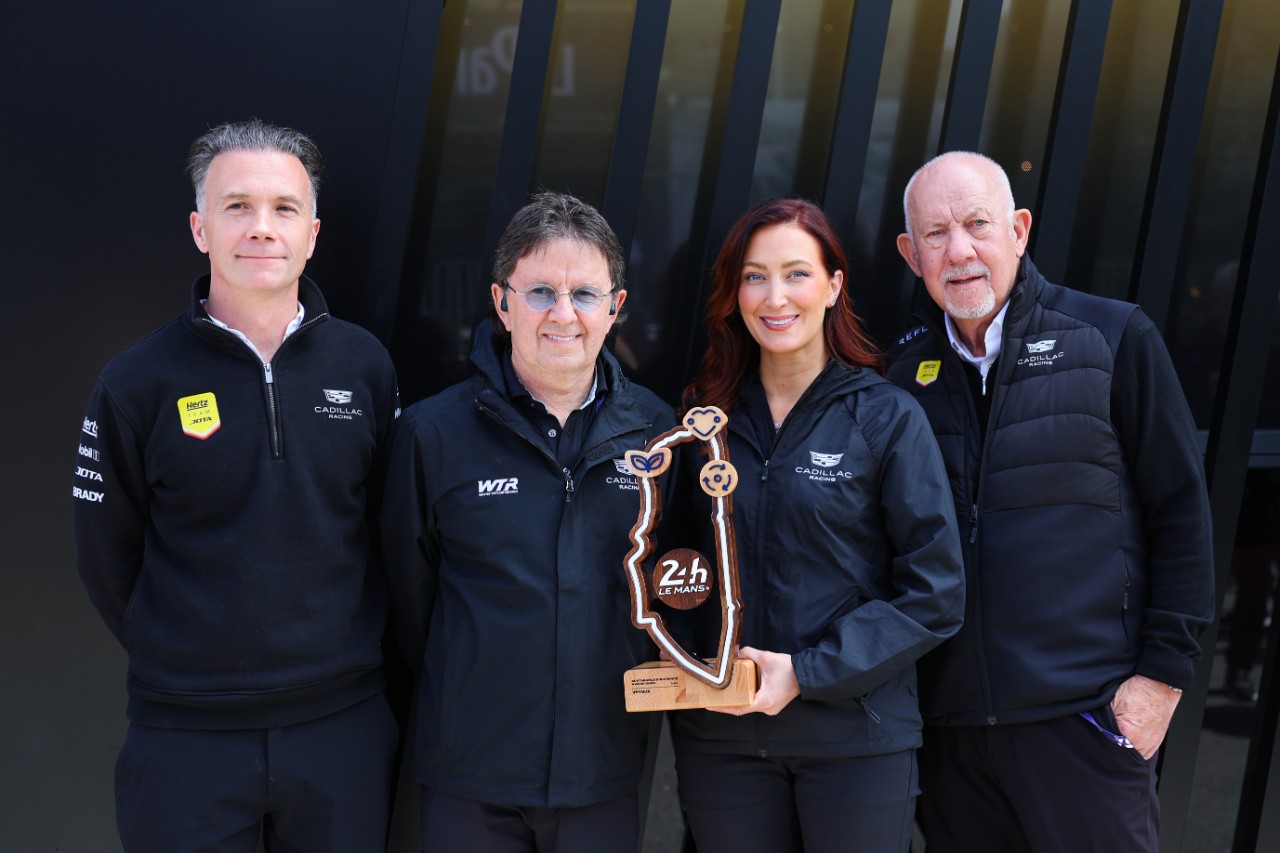
Cadillac Racing took the 2026 DHL Sustainable Endurance Award in the Hypercar category, presented at Le Mans by the FIA, the ACO and DHL. That is the headline, and the headline is the least interesting thing here. The interesting thing is that the jury cited Cadillac for submitting one of the most complete, structured and measurable dossiers it received. Measurable. Hold that word. It is the whole column.
Greenwash has a tell. Greenwash speaks in adjectives. It is committed, it is passionate, it is on a journey toward a greener tomorrow, and it never, ever gives you a number, because a number can be checked and an adjective cannot. So watch what Cadillac actually did. It moved its sea freight for the Cadillac WTR equipment from 70 percent in 2025 to 90 percent in 2026. It put its U.S. staff on the train between Paris and Le Mans. It ran road transport from the U.K. for JOTA and sourced equipment locally in Europe where it could. None of that is a journey. All of it is logistics, which is to say all of it is real, because logistics is the one department in any organization that cannot afford to lie to itself.
Then the catering. The average carbon impact per meal fell from 7.13 kilograms of CO2e in 2024 to 6.49 in 2026, through menu redesign, less beef, more plants, local sourcing, and donating the surplus to Les Restos du Coeur. Read that sentence again and notice what it does not do. It does not say the food was reimagined. It says 7.13 to 6.49. A team that reports its lunch to two decimal places is not performing virtue. It is keeping books.
I am, by trade and by temperament, the person who tells you the future is electric and that your nostalgia is a poor map of it. So understand that it costs me nothing to say the next part, and I am saying it anyway: this award is not about the powertrain. The cars at Le Mans are still hybrids howling through the Mulsanne darkness. Nobody at Cadillac is pretending otherwise, and the prize does not ask them to. What the prize measures is the part of motorsport nobody films: the freight, the catering tent, the air conditioning, the bottles. The boring 90 percent of the operation that the broadcast cuts away from. And that, not the trophy, is the signal.
Because here is the thing the eye-rollers miss. The plastic line item alone is almost comically small: five BWT water stations, water meters, a thousand reusable bottles handed to fans, single-use plastic gone from hospitality, roughly 4,000 bottles avoided, an estimated 114.8 kilograms of plastic and 319.3 kilograms of CO2 saved. Against a global industry that is one rounding error of a rounding error. I will not insult you by pretending it dents the planet. It does not. But it dents something else, which is the culture, and culture is where this game is actually won.
For a hundred years, the racing paddock has run on a single article of faith: that the spectacle excuses the waste, that the noise pays for the carbon, that a sport this thrilling has earned the right not to count. Hank, who regards a fuel gauge dropping fast as a kind of patriotism, would tell you that the smell of a paddock at dawn is worth any number of plastic bottles, and he would say it with his whole chest. The paddock has believed a softer version of that for a century. Cadillac Racing just stood up at the most sacred event in endurance racing and said: we counted. We counted the freight, we counted the meals, we counted the bottles, and we wrote it down where the FIA could check our arithmetic.
That is the move. Not the saving. The counting.
Now the honest part, the part I would want done to me. An award is not an audit. The plastic figures are flagged as estimates, the 2026 energy metering is described as a baseline, which is the polite industrial word for we have not measured this before but we intend to start, and a single prize at a single race tells you a team filed a good dossier, not that the sport has been redeemed. A team can do every one of these things and still fly its hauling crew across an ocean for the next round. I would believe the trend the day the numbers show up again next June, lower, with last year's figure printed beside them. A baseline that is never revisited is just a press release with a decimal point.
But I would rather argue with a team that counts than with one that emotes. Give me 7.13 to 6.49 over a paragraph about passion every single time, because the first one I can hold you to and the second one is a feeling wearing a lab coat. The genuine threat to honest measurement in this industry was never the racing tent. It is the rising tide of synthetic confidence, the machine-written sustainability prose now flooding every corporate channel, the AI-generated dossier that produces the adjectives of progress with none of the labor of having earned them. A spreadsheet built by people who took the train is the opposite of that, and it is the only kind I trust.
So no, the trophy is not the story. The sea freight is the story. Ninety percent, up from seventy, written down where someone can check it next year. Heritage, spectacle, the howl down the Mulsanne, and a fleet of shipping containers that took the slow boat on purpose. Put that last item last, because it is the only one that has to be true. Everything else is just engine noise, and engine noise has never moved a single bottle.
The award goes to Cadillac. The argument goes to the people who count. They are the same people, this year. We will see about next year.
Editorial disclosure: Cadillac provided two Drive Observer columnists with a track-day lunch at a recent media event, plated by the team's own catering program. Per our strict ethical policy, we do not let this influence our coverage.