The Heartbeat of America Is Back, and I Hate That It Got Me
Chevrolet dusted off a forty-year-old slogan for the country's 250th birthday. I came to scoff. I stayed to salute.

I want to be very clear about who I am before I tell you what happened to me this week. I am the man who keeps a wire brush by the coffee pot. I have referred to a marketing department, in print, as a room where good cars go to be euphemized to death. When a brand tells me it is woven into the fabric of America, my hand goes to my wallet on instinct, the way a sober man's hand goes to the railing on a wet deck.
So understand the cost of what I am about to say. Chevrolet brought back "Heartbeat of America," and it got me.
It got me clean.
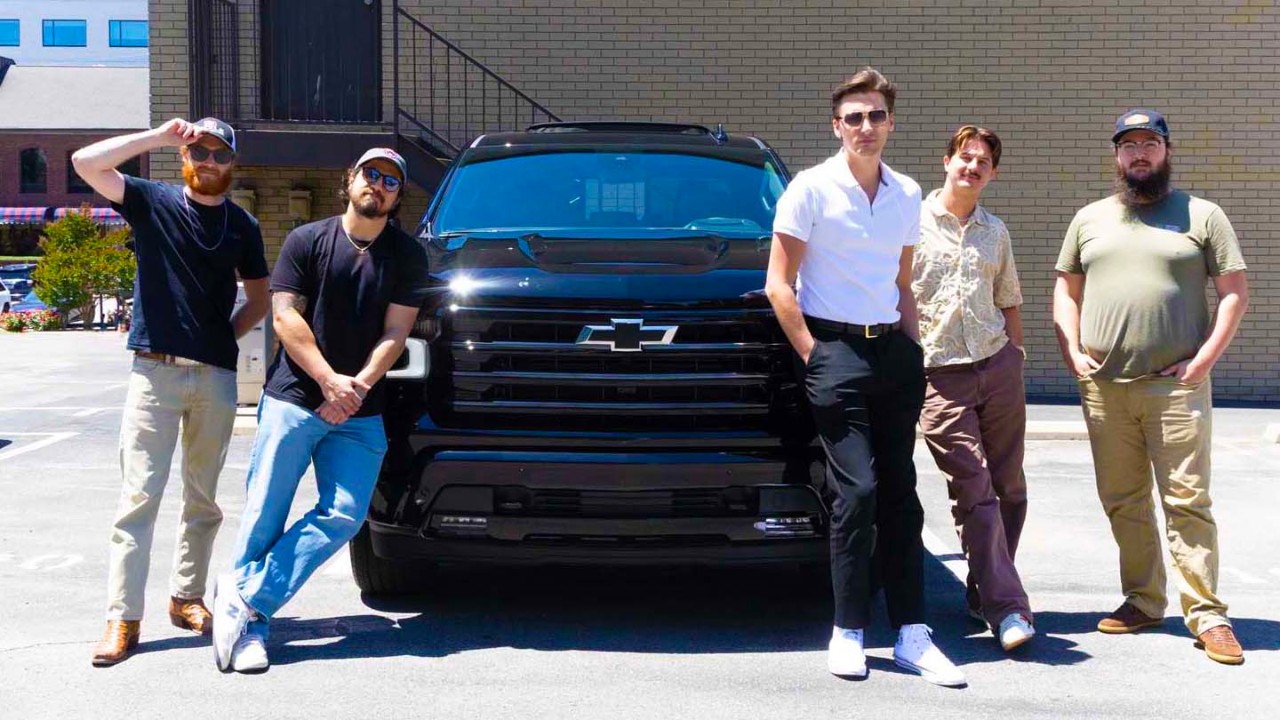
Here are the facts, because the facts are the only thing standing between me and a greeting card. As of today, June 24, Chevrolet has reintroduced "Heartbeat of America," a slogan it ran consistently from 1986 to 1993, timed to the country's 250th birthday. The original was sung by a Motown artist out of Detroit. The new one is carried by The Red Clay Strays, a rock band out of Mobile, Alabama, whose sound the release says spans country, rock and soul. And here is the detail that did the damage: the song is built on the recorded heartbeats of real people, in Texas, in Detroit, in Kansas.
I read that line standing up, and I had to sit down.
A cynical man, which is my full-time occupation, knows exactly what this is. It is a tagline an ad agency was paid to evolve. It is "America's heartbeat is its people," a sentence so smooth it could be poured into a gas tank. It is the same brand that, in the next breath, reminds you it has nearly 3,000 dealers, the way a man mentions his boat. I know the machine that makes this stuff. I have spent thirty years hating the machine that makes this stuff.
And then they told me about Tootsie Tomanetz.
Tootsie Tomanetz is, per the release, the 91-year-old pitmaster behind Snow's BBQ in Texas, and she remembered the original ad, and they put her heartbeat in the song. Ninety-one. Still working the pit. They recorded the actual rhythm of that woman's heart and built a Chevrolet jingle on top of it. I sat there waiting for the part of me that scoffs to do its job, and the part of me that scoffs took the day off.
There is Josh York in Detroit, who grew up in a Suburban and bought a Suburban for his own kids, and built an apparel company in his hometown to make jobs. There is Spencer in Kansas, who films himself mowing strangers' lawns for free and hauls the mower in a Silverado that the release flatly calls a key enabler of the business. That is the unglamorous truth of a truck stated in marketing copy by accident: not an image, not a lifestyle, a tool that lets a man do the work. The committee wrote something true and I do not think they noticed.
That is the trick, and I want to name it so you can defend yourself against it the way I failed to. This campaign does not sell you a car so much as it sells you a country you are afraid you already lost. It puts the vehicles in the back of the shot, the Colorado, the Traverse, the Silverado HD, and puts the people up front, and it dares you to feel something. Reader, I felt something. I felt it in a register I usually reserve for a cold-start V8 and the first hard pull of a clutch that means it.
Now let me ration the sentiment before it floods the bilge, because there is a list at the bottom of this release that tells you what is really going on. The vehicles in the commercial include the Bolt, the Trax, the Equinox, and the Equinox EV. The same brand humming about heartbeats and helpful neighbors is selling you a heartbeat that runs on a charging schedule. You cannot wave a flag this hard and roll an electric crossover through the patriotic montage and expect me, of all the men in America, not to notice the cord.
But here is where they earned the grudging part of my respect, and I will give it through clenched teeth. There is a Stars and Steel edition, available across five U.S.-assembled nameplates, the Corvette among them, and for every one sold Chevrolet says it will donate $250 to nonprofits supporting veterans and military families. That is not a slogan. That is a number, attached to an act, pointed at people who earned it. A number I can verify is worth more to me than a thousand sentences about fabric and nation.
So where does that leave a man who walked in to torch this thing and walked out wiping his eyes and pretending it was sawdust.
It leaves me here. The slogan is forty years old. The band's new album, out this month, is called "Grateful," which is either fate or focus-grouped and I have decided I do not want to know which. The heartbeats are real. The trucks are real. The donation is a real number. And the whole gleaming apparatus around it is exactly the kind of corporate machinery I have spent a career swearing I am immune to.
I was not immune. I want that on the record. A marketing department reached into a 91-year-old woman's chest, pulled out the beat, set it to music, and made a man who brushes rust off his coffee pot stand at attention in his own garage.
Heartbeat of America is back. It is an ad. It knows it is an ad. It worked on me anyway, and the fact that it worked, against my will, on my better judgment, with the cord still showing, is the single most American thing I have witnessed all year.
I am going to go change my oil and recover my dignity. In that order.