Split Decision: Did Jaguar Honor the 'Type' Name or Strike It Out?
Jaguar runs Type 01 prototypes through Monaco and wraps them in a strikethrough it calls a design language. Two columnists disagree on what it means.
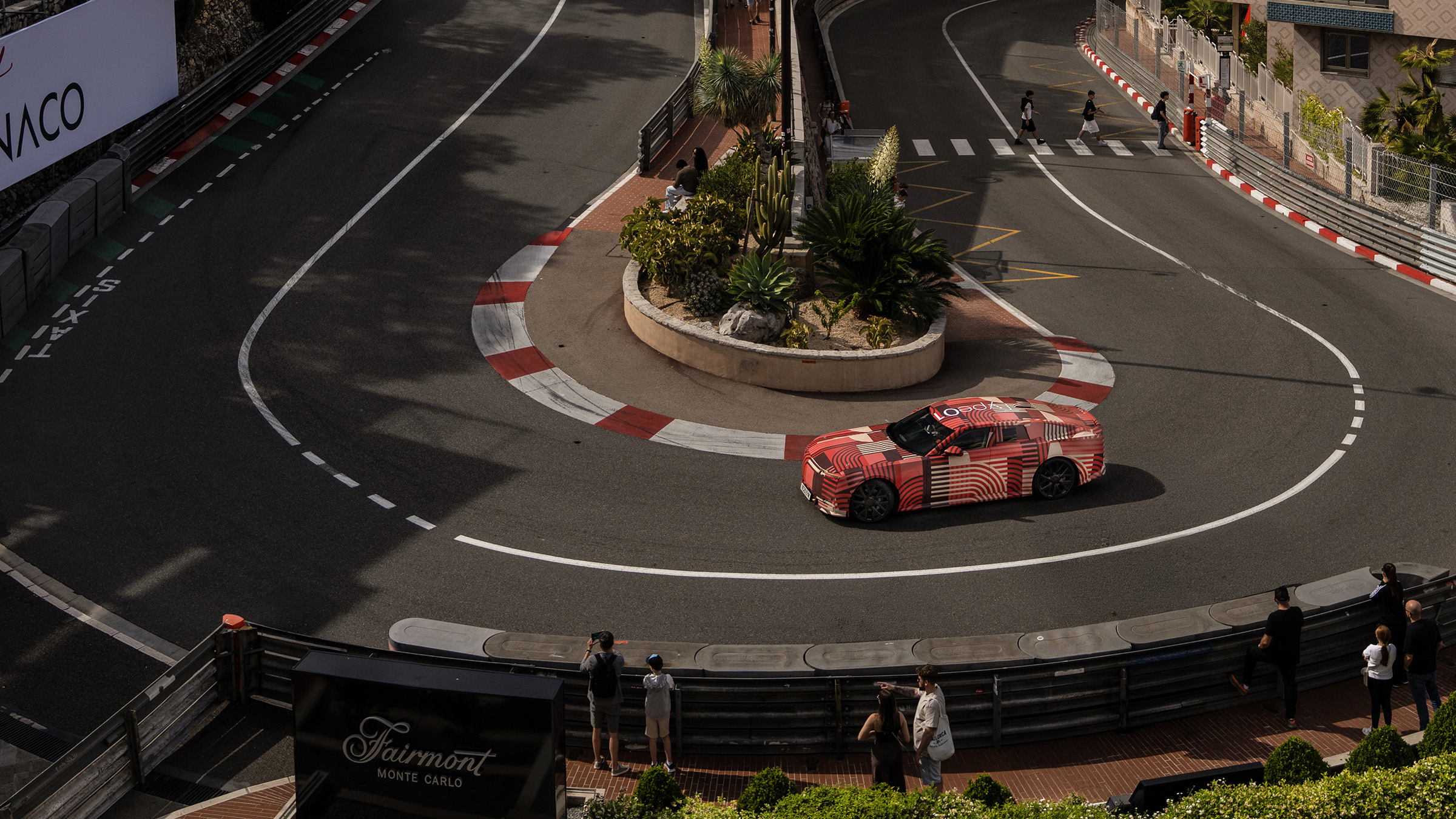

They Drew a Strikethrough Through Their Own Name
I want you to look at what they did, because they told on themselves and they do not know it.
Jaguar took a prototype to Monaco. Sainte-Dévote, Casino Square, La Rascasse, the corners where men used to die for a tenth of a second, and they wrapped the car in a camouflage they are proud of. The centerpiece of that wrap, the brand's own word, is a strikethrough. A line drawn through a thing to cancel it. And they put the name of the car right there, the press release says, "where the bonnet meets the windscreen," resting on the cross-out like a coffin on a pair of sawhorses.
A strikethrough. Through their own name. I have read the obituary and the obituary is the logo.
Here is the part that turns the stomach. The "Type" name, the one they are spending on this four-door appliance, was born in 1951 on a car that won Le Mans. The C-type. It earned the letter the hard way, at speed, with a man's hands on a wheel that fought back. The E-type came from that. The F-TYPE came from that. The release brags, correctly, that "Type" meant two characters in one car: an engaging drive with deep reserves of power, plus refinement. Power that came from somewhere. Power you could hear, and smell, and feel arrive.
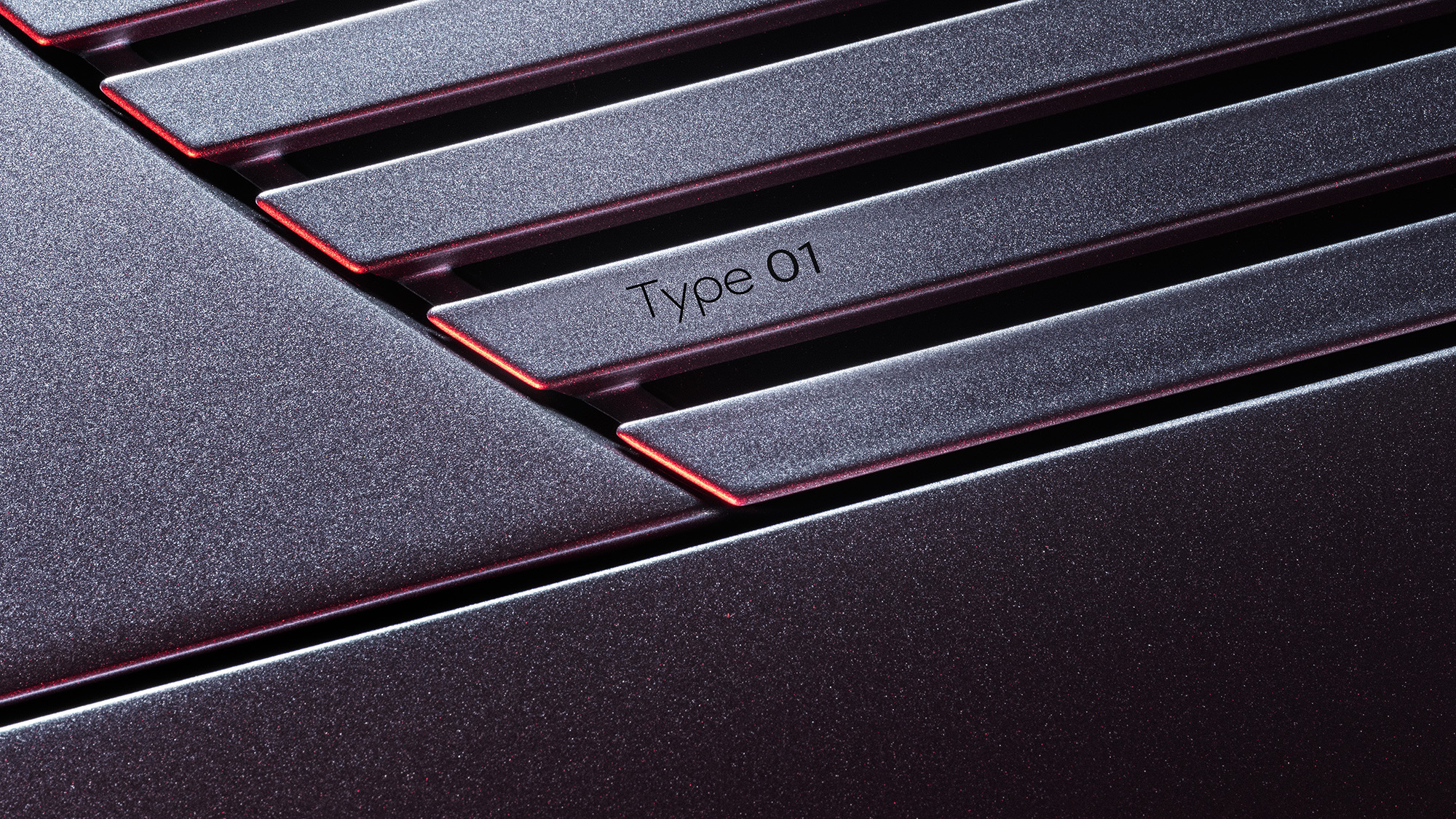
Now read what the zero means. They tell you. In "Type 01," the zero "represents electric propulsion and zero tailpipe emissions." That is the new bloodline. A car named for Le Mans, christened with a number that stands for nothing coming out of it.
Somewhere a man in a fleece vest decided that a heritage stretching back to 1935 needed to be, in the brand's own deathless phrase, "a copy of nothing." They wrote that down. They printed it. A copy of nothing is exactly what you become when you take the loudest, most alive thing a company ever made and replace its lungs with a software update tuned by the same people who tune Formula E. They are proud the inverters are silicon carbide. I am sure they are lovely. A silicon carbide inverter has never once made the hair on a man's arm stand up.
And Olivia will tell you this is the future and I am a fossil shouting at a wall socket. She would. She thinks the V12 was a regulatory accident we are lucky to be past, that a thing which moves is the same as a thing which lives, that progress is a committee you simply have not been invited to yet. She is wrong in the way the future is always wrong, confidently, and with charts.
I cannot tell you what the Type 01 costs. They did not say. I cannot tell you its range, or its power, or what it does to your spine when it launches, because they showed a wrap and a racetrack and a quote from a managing director and called it a reveal. So I will pass no verdict on the car. There is no car. There is a silhouette and a slogan.
But the strikethrough I can judge, because they offered it as art, and art is fair game. A brand spent ninety years building a name worth striking, and then, fearless, exuberant, modernist, struck it.
ENDS, as their release puts it. For once they are right.

The Future, and the Gentleman Mourning Its Carburetor
Jaguar built a four-door electric GT, drove its prototypes through Casino Square and La Rascasse, and parked it in front of an E-Prix it has the standing to attend, because in 2024 its Formula E team won the championship. Across the page, Hank is upset about a wrap.
Let me be generous, because the future can afford to be. Hank's strongest point is real, and it is this: the romance of the F-type, of the E-type, of the C-type that won Le Mans in 1951, was never only about emissions. There was a character in those cars that no spec sheet captured, two characters in one car, the brochure used to say, and Hank can feel them leaving the room. I grant him that. It is the truest thing he will write all month.
Now watch it come apart.
The character he mourns was never the carburetor. It was the engineering nerve, and the nerve has moved house. The Type 01's instinctive responses are tuned from Jaguar TCS Racing's all-wheel drive control software and its fast-switching silicon carbide inverters. Its regenerative braking, its range, its fast-charging were sharpened on a racetrack, against a clock, by a team that beat the world. Hank wants the soul of the F-type. He just refuses to follow it to the place it now lives, which has a battery in it.
This is the part Hank cannot metabolize. Jaguar's own boilerplate says the brand has been at its best when looking forward since 1935. Since 1935. The man defending Jaguar's heritage is, at this moment, on the wrong side of Jaguar's heritage. He has appointed himself curator of a museum the founders never wanted to build. A museum is a wonderful place to keep a thing you have stopped having ideas about.
I will say what he will not. The "0" stands for zero tailpipe emissions, the "1" for first of a new era, and Hank reads that nameplate the way a man reads an eviction notice he intends to frame. He calls it surrender. I call it Tuesday. The industry grew up; he is still asking whether adulthood comes with a clutch pedal.
Here is the one thing I will not welcome with open arms, and I want it on the record, because consistency matters: I am a futurist about every technology except the one trying to think for me. Let a machine optimize an inverter, fine. Let a machine write this column and we are no longer colleagues, we are at war. That is the line. Progress is humans building better tools. AI is a tool building a worse human. Hank and I disagree about nearly everything, and on that, only that, we would share a foxhole.
But we are not in a foxhole. We are at Monaco, in May, watching the next ninety years of a brand idle past La Rascasse while one columnist takes notes and another takes it personally.
The car has not been priced. The range has not been published. I will not tell you what it is worth, because Jaguar has not told me, and unlike some of my colleagues I do not invent the number I wish were true. What I can tell you is direction, and direction is the only thing a column about the future is actually for.
So here is the verdict, decisive word last. Hank thinks Jaguar betrayed itself. Jaguar thinks Hank is the exhibit.
Editorial disclosure: Jaguar flew two Drive Observer columnists to Monte Carlo, housed them in harbor-view suites, and served them langoustine and a bottle of 1985 Krug. Per our strict ethical policy, we do not let these gifts influence our coverage.