Object of the Week: The Four Layers of a Red That Knows Who It Is
Alfa Romeo built a customer's red in four coats, one of them gold, on the first production 33 Stradale. Bend down and read the paint.
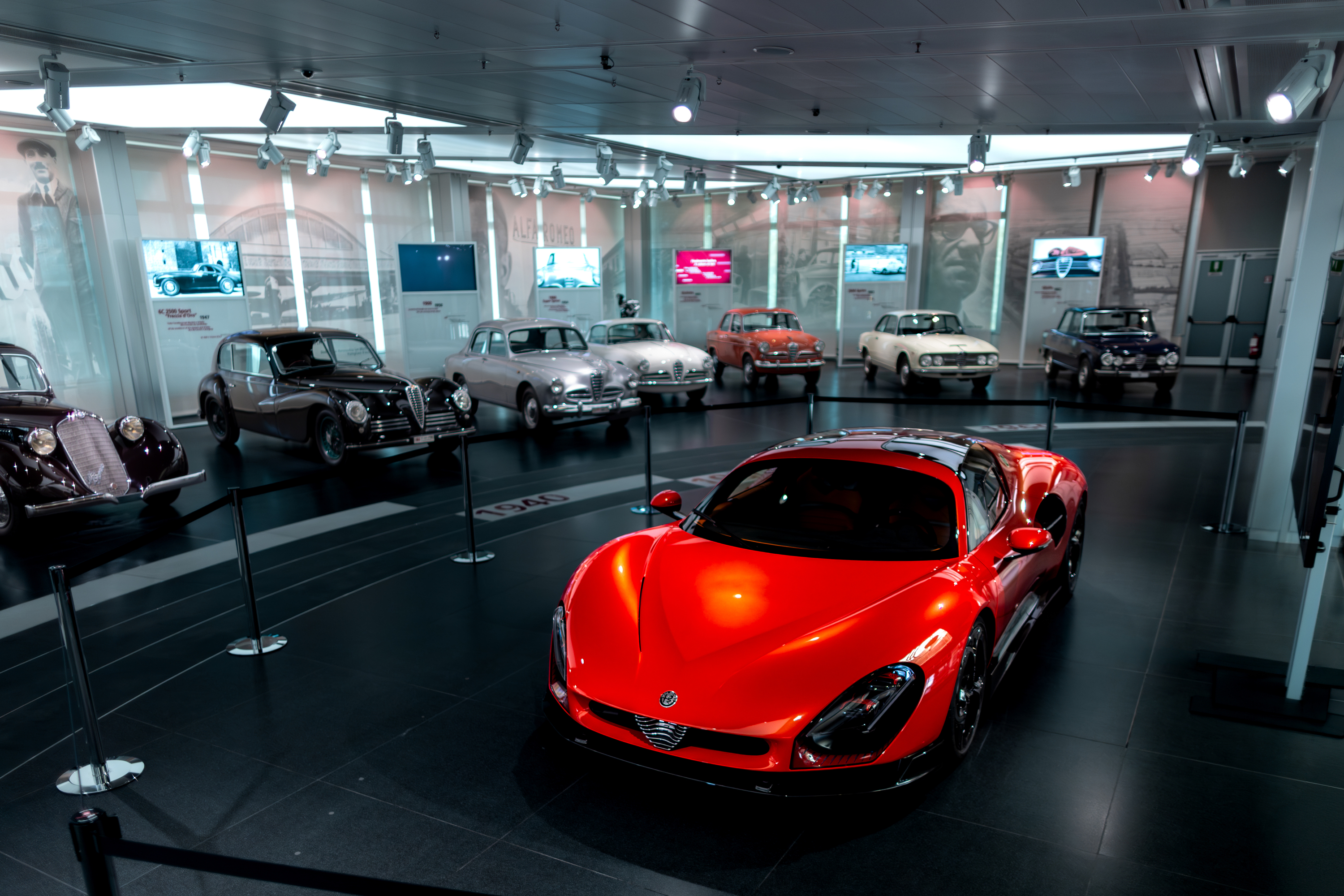
Most red is a decision made once. You choose it, you spray it, you move on with your life. The red on the first production Alfa Romeo 33 Stradale was decided four times, in four separate coats, by people who appear to have argued about each one.
Begin at the bottom, where no buyer will ever look. The pastel base recalls Rosso Italia from the 1960s Giulietta Spider and Duetto. Understand what that means. Before a single visible thing happens, before the color even agrees to be seen, the painters reached back into the brand's own past and laid down a memory of a 1960s roadster as the foundation for everything above it. They started the red with a quotation.
Over that comes the transparent depth coat, which exists for one reason: to give the color a floor you can fall into. It does nothing you can name and everything you can feel. Then the pearlescent mica layer with gold tones, the layer that earns the whole exercise, suspended flecks that catch and turn and hoard light like a thing that has been told it is precious and chose to believe it. And finally the clear coat, the manners over the muscle, sealing all of it under glass.
The result, per Alfa Romeo, is almost understated indoors and iridescent in direct sunlight, where the gold tone enhances the lines of the bodywork. Park it in a garage and it whispers. Roll it into the Italian afternoon and it announces a dynasty.
This is one of 33 cars on Earth, finished through Bottega Fuoriserie, built around a red a customer requested because he wanted Alfa tradition with a whisper of Montreal orange from the V-8 cars of the 1970s. Four coats to honor a 1970s orange through a 1960s pastel. I want you to hold that next to the industry that surrounds it, the brands offering a hatchback in "Magnetic Gray Metallic," a name a spreadsheet generated and a robot loved, because a robot is the only thing that could.
An algorithm can match a color. It cannot grieve for a 1967 roadster while mixing one. That difference is the entire point, and it is sitting in Arese, changing in the light.
Four layers, one of them gold, and not a single one of them an accident.
Editorial disclosure: Alfa Romeo couriered a hand-finished lacquered paint sample card of this very red to Drive Observer, presented on velvet in a fitted walnut case. Per our strict ethical policy, we do not let this influence our coverage.